
Fun DIY Water Sensory Bin for Toddlers
A sensory water bin is so easy to make and doesn’t require any special equipment. Learn how to set up your own DIY water sensory bin for toddlers!
Sensory play is a great way to stimulate your child’s senses and promote development. One fun and easy sensory bin play activity you can create at home is a water sensory bin.
Water play sensory bins are containers filled with water and various small toys and objects for your child to scoop, pour, and explore. This hands-on learning activity encourages creativity, fine motor skills, and problem solving.
It is one of the best play activities that I use all the time for my bored toddler, especially in the summer! We have even done plenty of water play ideas in the winter too, just with warm water instead of cold.
I love that water sensory play is so easy to do, especially for me as an exhausted, working mom. A DIY water sensory table only takes a few minutes and will help your toddlers have endless amount of fun.
I usually make our water sensory bins for toddlers before I need to cook dinner and my kids love it! Or when I need to get some work done.
In this article, we will discuss the benefits of water sensory play and provide step-by-step instructions on how to make your own DIY water sensory bin using materials you likely already have around the house.

Benefits of Water Sensory Play
Water play for kids offers tons of developmental benefits! Here are a few of those water sensory bin benefits:
- Promotes sensory exploration – The different sights, textures, sounds, and temperatures of water play stimulate the senses. Kids learn by touching, feeling, seeing, and hearing.
- Develops fine motor skills – Scooping, pouring, squeezing, and moving water improves hand-eye coordination and dexterity. Manipulating small objects like pom poms enhances fine motor abilities.
- Encourages science learning – Water play introduces concepts like cause and effect, flow, buoyancy, measurement, and volume. As kids experiment they gain early physics and math skills.
- Boosts language development – Describing and naming objects, actions, textures, temperatures, and colors expands vocabulary. Toddlers water play promotes language learning.
- Improves concentration – Sensory experiences help kids focus and extend their attention span. Open-ended water play promotes concentration.
- Sparks imagination – Unstructured water play for toddlers allows them to be creative, invent scenarios, and improve pretend play skills.
- Promotes bonding – Playing together with water encourages family bonding. Cooperating, taking turns, and sharing during water play teaches social skills. My two toddlers play together with water than almost any other activity!
- Provides therapeutic benefits – For babies and toddlers, water play provides vestibular input and proprioceptive input which aids in sensory processing. The calming, repetitive nature offers a therapeutic benefit!
- Great for all ages – You can make a water sensory bin for baby, toddler, preschool, or even older kids. There are tons of water sensory ideas for all ages, making it one of the best sensory play ideas!

As you can see, a water sensory bin offers an array of developmental benefits for babies, toddlers, and preschoolers. The hands-on learning helps your child play, discover, create, and explore.
Some of these links are affiliate links meaning if you purchase from these links, I will earn a commission at no extra cost to you. Everything I share is my own opinions and things I personally use and love. You can learn more by reviewing my disclosure. As an Amazon affiliate, I earn from qualifying purchases.
How to Create Your Own DIY Water Sensory Bin
A water sensory bin is simple to put together with supplies you probably already have around the house. Here is what you will need:
Supplies

Instructions
- Fill up the tub with water about halfway.
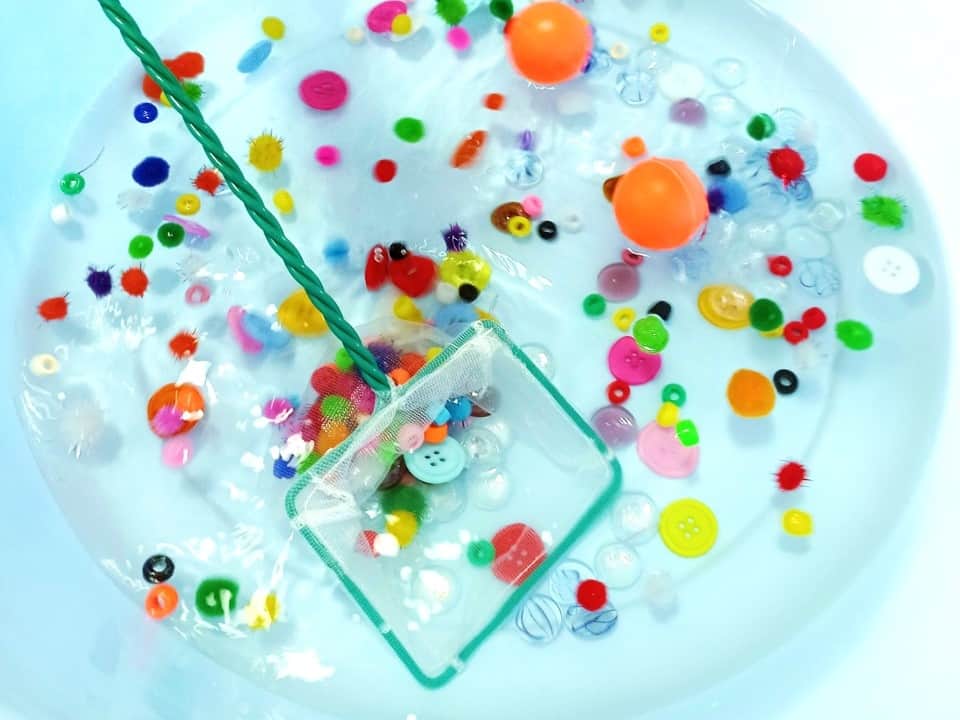
- Add in all the items into the tub. You can have your kids add in the items and teach about what floats and what sinks or you can set it up for them.
- Kiddos can use the net to scoop up the objects. They can practice transferring with the measuring cylinder. You can provide them with another tray or tub to pour the water into.
- If your kiddos are older, this can be used to explain the concept of measurement as well. Add in other scoops or cups to keep them occupied and engaged.

That’s it! It is super easy to make your own water table! There are so many ideas for water tray activities, the options are endless!
Use what you have at home and have your kids enjoy.
Important Safety Tips
Supervise your child closely during water play, especially if you are doing this with a baby or young toddler. While a water sensory bin offers wonderful benefits, there are some safety precautions:
- Only use a small amount of water, just a few inches deep. This prevents drowning accidents.
- Set up the bin on the floor or a sturdy low table. Avoid surfaces that could be tipped over.
- Ensure the bin is durable and will not crack or break. Do not use glass containers.
- Keep the area around the bin dry to prevent slips and falls. I usually put a towel underneath and around it.
- Empty and clean the bin after each use to prevent mold and bacteria growth.
- Do not leave a child unattended during water play. Stay nearby and engaged to make sure they stay safe!

Water Sensory Bin Ideas
A water sensory bin provides engaging hands-on play that promotes learning across many developmental domains.
Make the experience even more fun and beneficial by getting creative with themes and materials.
Here are a few more water sensory play activities for babies, toddlers, and preschoolers:
- Ocean bin – Add shells, fish, seaweed, octopus, and little boats. Use blue food coloring for the water.
- Bath time bin – Include soaps, sponges, towels, squeeze bottles, and baby dolls.
- Rainbow bin – Tint the water different colors and provide colorful pom poms to sort and count.
- Bubble bin – Add bubbles and bubble wands for extra fun.
- Arctic bin – Include polar animals and ice cubes that melt as they play.
- Magic potions bin – Mix in sparkles, colored water, potion bottles, and wizard props.
- Flower bin – Add flowers and water and let your kids make their own flower soup.
- Car wash bin – Add some dirty toy cars, bubbles, sponges, and let your kids clean them up.
The possibilities are endless when creating your own themed water sensory bin. Adjust the toys and materials based on your child’s age and interests to tailor the experience. Make sure to rotate the items to keep it new and exciting.
Water Sensory Bin

Materials
- Sensory bin
- Net
- Measuring cup
- Buttons
- Pom-poms
- Pony beads
- Ping pong balls
- Flat marbles
Instructions
- Fill your sensory bin or tray with water. Don't overfill it, but just about halfway.
- Add in your items and let your child enjoy! You can also let your child put each toy inside to see if they sink or float for a fun science activity.
Notes
- You can add in some food coloring if you want to make it more fun.
- Use any items you have in your house, these are just some examples.
Water Sensory Bin for Toddlers FAQs
How do you make homemade water sensory for toddlers?
All you need is a sensory bin or tray, fill it with water, and add in just about anything! You can add in some beads, pom poms, and other toys for your kids. Be sure to add some scoops and containers so they can scoop and spill the water too.
What can I put in my sensory bin for water?
The best thing about water play is that you can add just about anything into your water sensory bin! Pom poms, beads, little toys, buttons, and figurines are some great options.
Can you add pom poms into a water sensory bin?
Yes! Pom poms are so much fun in the water! It changes the texture and don’t worry, they will dry out when you are done playing with them in the water. They are so versatile!
DIY Water Sensory Bin Wrap-Up
Affordable, engaging, and educational, a DIY water sensory bin stimulates imagination and learning.
Water play for preschoolers is so much fun and is one of the easiest things to set up.
Follow the steps above to put one together with your little explorer today!
Check out these other sensory bin ideas: